
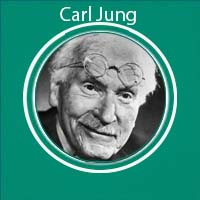
72 Archetypes by Carl Jung
& The Subtle Chakra System
What Are the “72 Archetypes”?
A search for “72 archetypes” sits right at the fascinating crossroads of depth psychology, ancient mysticism, and sacred numerology. While Swiss psychiatrist Carl Jung never published a rigid list of exactly seventy-two archetypes, seekers exploring the deeper layers of human consciousness frequently bring together Jung’s concept of universal psychological patterns with the ancient mystical number 72.
Whether someone arrives at this phrase through Jung’s 12 primary personality archetypes, the 72 Names of God in Kabbalistic mysticism, the 72 decans of the zodiac and esoteric Tarot, or the 72,000 subtle energy channels (nadis) described in ancient yogic texts, the underlying quest is the same: understanding the invisible, universal blueprints that shape human thought, emotion, and spiritual evolution.
Who Was Carl Jung?
Born on 26 July 1875 in Kesswil, Switzerland, Carl Gustav Jung was a pioneering Swiss psychiatrist, psychoanalyst, and founder of analytical psychology. Originally a close collaborator and chosen successor to Sigmund Freud, Jung eventually parted ways with Freud because he felt Freud reduced the human psyche purely to biological drives and repressed trauma, ignoring the profound spiritual dimension of human existence.
Jung travelled extensively—studying indigenous cultures in Africa and North America, as well as ancient texts from India, China, and medieval Europe—before passing away in Küsnacht, Switzerland, in 1961. His life’s work bridged modern clinical psychology with Eastern philosophy, mythology, quantum physics (through his dialogue with Nobel physicist Wolfgang Pauli), and the spiritual search for wholeness.
How Carl Jung Came to Talk About Archetypes
While working as a psychiatrist at the Burghölzli psychiatric hospital in Zurich early in his career, Jung noticed something extraordinary among his patients. People who had never studied ancient mythology, comparative religion, or classical literature were having dreams and visions containing identical symbols, motifs, and mythic storylines found in ancient Greek, Egyptian, and Indian scriptures.
Jung realised that beneath our personal unconscious (our individual memories and forgotten experiences) lies a much deeper, shared reservoir he named the Collective Unconscious. Just as the human body inherits a shared biological blueprint—two eyes, a heart, a nervous system—Jung proposed that the human psyche inherits universal, innate patterns of perception and behaviour, which he called Archetypes.
Among the core archetypes Jung identified are the Self (the unifying centre of wholeness and the divine spark within), the Shadow (our repressed fears and unacknowledged traits), the Anima and Animus (the inner feminine and masculine energies), and the Wise Old Man / Great Mother. Later writers popularized a framework of 12 Jungian personality archetypes (such as the Sage, the Hero, and the Explorer), which often intersects in modern spiritual searches with the mystical number 72.
The Mystical Interpretation of the 72 Archetypes & Jung’s Connection
Across ancient spiritual traditions, the number 72 carries deep sacred significance—from the 72 Names of God (Shem HaMephorash) in Jewish mysticism and Kabbalah, representing 72 distinct frequencies or angelic qualities of divine consciousness, to the 72 five-degree subdivisions of the celestial sphere in ancient astrology and Tarot.
Jung made the bridge between psychology and these mystical traditions during a period of intense inner exploration recorded in his famous Red Book (Liber Novus), as well as through his deep study of Gnosticism, medieval alchemy, the I Ching, and Indian Yogic philosophy. Jung recognised that ancient mystics were not inventing arbitrary superstitions; rather, they were mapping the living archetypes of the collective unconscious through symbolic language.
To Jung, mystical systems like the 72 divine names or esoteric mandalas were symbolic representations of the psyche’s journey toward Individuation—the process of integrating all fragmented parts of the personality into the central archetype of the Self, where human consciousness experiences direct unity with the Divine.
Is There a Connection Between Archetypes and the Chakra System?
Yes—and Carl Jung himself was one of the first Western psychologists to study it seriously. In 1932, Jung delivered a landmark series of lectures in Zurich titled The Psychology of Kundalini Yoga, in which he explicitly compared the awakening of the Kundalini energy through the chakras to the psychological journey of Individuation and awakening to the higher Self.
In ancient yogic science and Sahaja Yoga, as taught by Shri Mataji Nirmala Devi, the subtle energy system is composed of 72,000 subtle channels (nadis) that converge into three primary energy channels and seven main chakras (energy centres) along the spine and brain. Each chakra governs specific innate qualities, psychological tendencies, and spiritual virtues:
- Mooladhara Chakra: Embodies innocence, wisdom, and groundedness—the foundational purity Jung associated with the Divine Child archetype.
- Swadisthan Chakra: Governs pure creativity, aesthetics, and spiritual knowledge.
- Nabhi Chakra: Represents inner peace, generosity, balance, and spiritual evolution.
- Anahata (Heart) Chakra: The seat of unconditional love, compassion, fearlessness, and the pure Spirit (Atman)—directly paralleling Jung’s central archetype of the Self.
- Vishuddhi Chakra: Reflects collective consciousness, communication, and witness-state detachment.
- Agnya Chakra: Governs forgiveness, humility, and the transcendence of ego and conditioning (the Shadow).
- Sahasrara Chakra: The thousand-petalled crown centre where individual awareness integrates into universal collective consciousness.
While Jung mapped these archetypes intellectually through dreams and mythology, Sahaja Yoga offers the direct, living experience of them: when the Kundalini rises and awakens the chakras through Self-Realization, these timeless spiritual archetypes cease to be abstract symbols in the unconscious and become tangible, vibrant qualities felt directly as cool vibrations on the central nervous system. Experience this now!