
Diet by Temperament
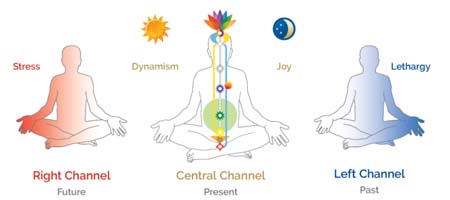
The Right Channel (Sun Channel | Pingala Nadi)
In brief, the Right Channel is responsible for the right sympathetic nervous system. It provides vital energy for creativity, our rational mind, future planning, and physical dynamism.
The right channel is associated with active action and analyzing desires, linking directly with the brain’s analytical activities to fuel physical and mental execution.
The Left Channel (Moon Channel | Ida Nadi)
In its pure state, the left energy channel brings about emotional balance and helps us express the qualities of deep joy, pure love, and compassion.
If your left energy channel is in distress, you may experience emotional extremes. This often shows up as depression, lethargy, sadness, low self-esteem, or guilt. To return your left channel to a balanced state, all you need is meditation. With Sahaja Yoga meditation techniques and a supportive diet, we can easily renew your state of joy and emotional balance within.
Approaching Diet From a Temperament or Mood Standpoint
Balancing the Sun & Moon Channel
According to Sahaja Yoga meditation—which shares similar holistic concepts with traditional eastern frameworks regarding how certain foods affect our mental and physical well-being—we are not just looking at what is universally “healthy.” Instead, we are looking at a diet tailored to your daily temperament and mood.
Shri Mataji spoke about two types of states: those she called “right-sided,” who live life in what we would describe as the fast lane, and those who are “left-sided,” who can feel lethargic, overly emotional, or find it difficult to get motivated.
As you can imagine, busy people who are always on the go need nutritional choices that cool them down to bring them into balance. Generally speaking, they should eat less red meats (such as beef, lamb, and pork), which are considered highly heating to the liver and can be difficult to digest. In Sahaja Yoga, we say these foods over-heat the body.
Oily and deeply fried foods also strain the liver and can make a person more “fiery,” so they should be eaten sparingly. Similarly, pungent spices like chili, cayenne, and garlic are known to generate intense internal heat. Alcohol should be avoided whether you are currently left-sided or right-sided; it directly impacts liver function, and modern science increasingly reminds us that there are no truly safe limits. Coffee and tea are heating too due to their caffeine content.
It is important to note that while right-sided individuals should consume these heating foods strictly in moderation, a balanced diet including a variety of fresh nutrients remains essential for overall health.
From this framework, we can easily see that the foods that are a “minus value” to those who rush around, think, and plan too much would actually be beneficial, stimulating options for a person dealing with lethargy.
A right-sided person may find great success observing a diet low in high-octane protein, perhaps trying a vegetarian-based diet for a window of time. We are not advocating that this must be your fixed diet for life; rather, we suggest that these kinds of foods can be tested scientifically according to your unique personal needs, moods, and shifting personality types.
Evidence to support that a cooling liver diet benefits overactivity can be found here on this scientific research paper