
Kant. Dare to know
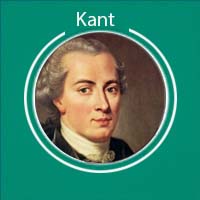
Immanuel Kant was born on April 22, 1724, in Königsberg,
Kingdom of Prussia (now Kaliningrad, Russia).
He spent his entire life in and around his hometown,
where he also died on February 12, 1804.
Immanuel Kant, fundamentally reshaped how we think about human autonomy, reason, and faith.
On Enlightenment: Stepping into Maturity
In his famous 1784 essay, An Answer to the Question: What is Enlightenment?, Kant defined enlightenment not as an accumulation of spiritual wisdom, but as an awakening of intellectual independence.
“Enlightenment is man’s emergence from his self-imposed immaturity. Immaturity is the inability to use one’s understanding without guidance from another.”
He argued that people remain unenlightened not because they lack brains, but because they lack backbone. He captured this in a classic battle cry:
“Sapere aude! [Dare to know!] ‘Have courage to use your own understanding!’—that is the motto of enlightenment.”
Kant pointed out that it is incredibly comfortable to stay in intellectual infancy, letting external authorities do the heavy lifting for you:
“If I have a book which understands for me, a pastor who has a conscience for me, a physician who decides my diet, and so forth, I need not trouble myself. I need not think, if I can only pay—others will easily undertake the irksome work for me.”