
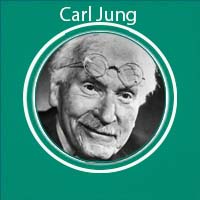
Carl Jung: Bridges Between Western Psychology and Eastern Wisdom
Short Biography
Carl Gustav Jung (1875–1961) was a Swiss psychiatrist and psychotherapist who founded Analytical Psychology. Originally a close associate of Sigmund Freud, Jung eventually diverged from Freud’s purely mechanistic view of the human mind. Throughout his long career, Jung explored the depths of the human psyche, synthesizing clinical observation with the study of mythology, religion, alchemy, and Eastern philosophies.
Main Philosophical Theories
Jung’s groundbreaking work introduced several fundamental concepts to modern psychology:
- The Collective Unconscious: Unlike the personal unconscious formed by individual memory, Jung proposed a deeper layer of the mind shared by all human beings, containing inherited patterns of intuition and human experience.
- Archetypes: Universal themes, symbols, and motifs residing in the collective unconscious—such as the Mother, the Shadow, the Anima/Animus, and the Self—that manifest in myths, dreams, and spiritual experiences across cultures.
- Individuation: The lifelong journey of self-realization and inner integration, where an individual brings subconscious aspects of the self into conscious awareness to achieve wholeness.
- Synchronicity: The principle of "meaningful coincidences"—events linked by meaning rather than direct physical cause and effect.
Interest in the I Ching and Eastern Philosophies
Unlike many Western scientists of his era, Carl Jung recognized that ancient Eastern traditions possessed a profound, sophisticated understanding of human consciousness. He dedicated years to exploring Hindu, Buddhist, Taoist, and Christian mystical texts to discover how spiritual symbols reflected inner psychological transformation.
Jung was particularly fascinated by the I Ching (The Book of Changes), an ancient Chinese divination text. Introduced to the translation by his friend Richard Wilhelm, Jung spent months testing the book and observing how the hexagrams aligned with the user’s subconscious state. In his foreword to Wilhelm’s translation, Jung explained that the I Ching operates on the principle of synchronicity—that the state of the universe at a given moment extends into every detail, including the fall of coins or yarrow stalks.
His deep engagement with Eastern thought extended to Kundalini Yoga and meditation. Jung saw Kundalini not merely as an abstract concept, but as the awakening of dynamic inner energy that drives the process of individuation. By studying Eastern philosophies, Jung sought to offer the West a path toward integrating mind, spirit, and energy.
Carl Jung – the Collective Unconscious
Carl Jung: Bridges Between Western Psychology and Eastern Wisdom
Carl Jung the Masks We Wear
Carl Jung Looking at Male Archetypes
Carl Jung - Psychology, Spirituality
Carl Jung: A Philosopher of the Psyche and Spirituality
Carl Jung Has a Near Death Experience
Carl Jung and Symbols of Alchemy
Stress - In the Words of Carl Jung, "Every crisis is a spiritual crisis."
Carl Jung, Symbols of Alchemy
Carl Jung 'Whenever We Touch Nature We Get Clean'
Carl Jung and Spirituality
Carl Jung, Quantum Physics and the Spiritual Mind
The Wisdom of Carl Jung
12 Archetypes as Seen by Carl Jung
Carl Jung – the Collective Unconscious
Carl Jung: Bridges Between Western Psychology and Eastern Wisdom
Carl Jung the Masks We Wear
Carl Jung Looking at Male Archetypes
Carl Jung - Psychology, Spirituality
Carl Jung: A Philosopher of the Psyche and Spirituality
Carl Jung Has a Near Death Experience
Carl Jung and Symbols of Alchemy
Stress - In the Words of Carl Jung, "Every crisis is a spiritual crisis."
Carl Jung, Symbols of Alchemy
Carl Jung 'Whenever We Touch Nature We Get Clean'
Carl Jung and Spirituality
Carl Jung, Quantum Physics and the Spiritual Mind
The Wisdom of Carl Jung
12 Archetypes as Seen by Carl Jung