
An Idol Is Not the Same as an Image
Transcending the Ego-Self & Recognizing the Modern Idolatries
Symbols vs. Idols: The Nature of Sacred Objects
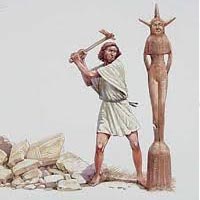
An image may be a symbol—a physical representation of a non-physical reality. ‘Idol’ is often used pejoratively by certain religious groups to bring other traditions into contempt by claiming their symbols are treated as independent realities rather than supports for devotion.
When independent divinity is attributed to an physical object, it is treated as an idol. When that same object is used as a support to concentrate devotion and channel grace, it functions as a symbol. True idolatry occurs when human allegiance switches from pure Being to substitute causes, ideas, or physical figures.
Nationalism: The Emotional Idol of the Modern Age
The lowest form of idolatry is worshiping another human being, such as political dictators, degrading humans to a subhuman level. This differs fundamentally from a disciple honoring a Guru, where devotion is offered to the Divine manifesting through the master rather than the physical person.
As genuine spiritual attachment faded in both Western and Eastern civilizations, nationalism arose to fill the void. Devotion to a purely political or territorial unit—devoid of spiritual or deep cultural grounding—is an allegiance to the worldly over the divine, which is the precise definition of idolatry.
Science & Psychology as Substitute Religions
Intellectually, science has become a major modern idolatry. People often demand that religious experience validate itself through scientific agreement, implicitly treating empirical measurement as ultimate truth while treating spiritual reality as secondary.
Similarly, modern psychology has largely replaced religion and functions as a truncated counterfeit of the ancient Guru-disciple tradition. While physical science accesses nature (Prakriti) without spirit (Purusha), psychology explores the subconscious while ignoring the superconscious (spirituality), leaving it unable to produce permanent healing without spiritual access.
The Idolatry of Art, Research, and Humanism
Modern society accords superstitious reverence to art and artists, yet much of modern artistic creation stems from ego and intellectualism rather than self-realization. Traditionally, the artist was an anonymous craftsman serving a higher spiritual purpose.
A similar false attribution applies to scientific research, which uncovers purely factual, relative truths rather than spiritual Truth that transforms the seeker. Humanism and social service, when severed from seeing the Divine in all beings, become idolatrous attempts to worship the human shadow without its divine substance.
Self-Worship & The Obsession with the ‘Modern’
The most pervasive idolatry today is the modern world’s worship of itself. Just as a rootless individual turns inward to become an egoist, society extols its own achievements without reference to timeless principles. The label ‘modern’ is treated as praise when it often simply denotes a lack of connection to higher reality.
Religion is not merely one department of life; life is a department of religion. Transforming all aspects of living into independent, self-sufficient pursuits creates an idolatrous world. True seekers must inwardly reject these false values and remember that the ultimate goal remains realizing the True Self.