
The Ancient Knowledge of the Chakras
Is this the correct version or is the New Version the Correct Version?
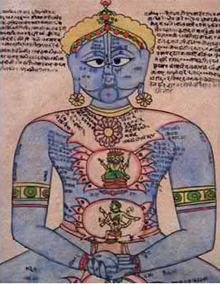
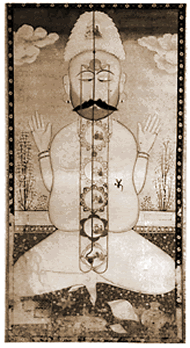
In Western society, the understanding of chakras has come into the public domain, and there is a feeling in the air that we are in a ‘new age’. We have a new mentality, a new morality, and, in general, an insatiable desire for the new.
With almost every new concept entering the public domain, there is a thirst for novelty. As with all things, this is a double-edged sword. While the thirst for the new allows for all manner of new theories to flourish, it raises a crucial question: how do we know which of these theories is correct?
Our Tendency to Add Personal Interpretation
The common tendency is to project our own interpretation and understanding based on personal perceptions. Our desire for the ‘new’ has meant that tradition is often cast aside, and we rarely consult ancient texts to see if the answers already exist. We are far more likely to accept a modern theory because it stimulates debate, allows us to flex our intellects, and gives us a sense of ownership as modern ‘movers and shakers’.
Commercial Opinions vs. True Meaning
All manner of health practitioners have stamped their opinions on the chakra system—opinions on how it functions, the qualities of each chakra, and their associated colors. Consequently, extracting the true, original meaning of the chakras has become increasingly difficult. While many new theories continue to emerge, this proliferation is often less about preserving genuine knowledge and more about good business. On the positive side, it is beneficial that awareness of the chakras has entered the public consciousness, allowing us to contemplate our subtle body.
Ancient Roots Pre-Dating Modern Concepts
Generally speaking, the available information on the chakra system can be confusing, conflicting, and unintelligible to the Western material mind. While recognizing that we possess a subtle energy system is an important step, we must understand that the chakra system is rooted in an ancient tradition dating back long before the birth of Jesus Christ—a lineage many New Age teachers have barely explored.
The Origins in the Vedic Tradition
The chakras are first mentioned in the Vedas, the oldest written tradition in India (2,000–600 B.C.), which was preceded by an oral tradition exploring the deeper spiritual aspects of existence. While some scholars claim the word chakra (“wheel”) refers to the chariot wheels of ancient invaders, a spiritual perspective offers a deeper view: highly evolved saints directly experienced the chakras as rotating wheels of energy within their subtle bodies during meditation and passed this knowledge down to their disciples. Correctly spelled cakra (pronounced with a ‘ch’), the word was also a metaphor for the sun and the eternal cycle of time (kalacakra), representing celestial order and balance.
Sacred Symbolism & Non-Dual Philosophy
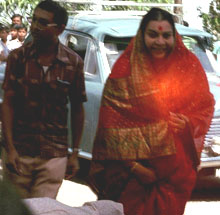
Ancient texts describe the Cakravartins as being preceded by a glowing golden disk of light—much like a spinning halo in front of them, as Shri Mataji also describes. Lord Vishnu is depicted holding a chakra in one of his four arms, and Lord Krishna carries a spinning disk on his index finger. Mention of chakras as psychic centers appears in the Yoga Upanishads and the Yoga Sutras of Patanjali (c. 200 B.C.). Ultimately, the chakras and Kundalini became an integral foundation of non-dualistic yoga philosophy, which flourished from the 7th century onward.