

Abraham Lincoln American President
Enlightened Soul
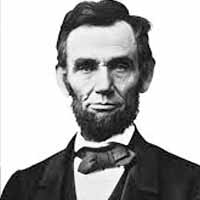
Abraham Lincoln & The Vishuddhi Chakra
“You have Abraham Lincoln. What a man! I think his blessings should work out one day in this country [USA]. A saint. What a personality.”
— Shri Mataji Nirmala Devi (Talk, 18th August 1984)
Recently I’ve been reading about the life of Abraham Lincoln and wanted to share something about how he embodied some of the subtle powers of the Vishuddhi Chakra. There are many parallels between his life and the explanations Shri Mataji gave about the pure manifestation and workings of the Vishuddhi.
There are a few striking similarities between the lives of Lincoln and Shri Krishna. Both came from very humble agrarian backgrounds: Lincoln’s father was a simple trapper who later worked a small piece of farmland, while Shri Krishna worked as a cowherd and is famous for his association with cattle herding and agriculture.
Both Lincoln and Shri Krishna rose from these unassuming origins to guide their nations through momentous civil wars—Shri Krishna in the Mahabharata conflict between the Kauravas and Pandavas, and Lincoln during the American Civil War (1861–1865) to abolish slavery and preserve the Union.
It’s a common human trait to dislike criticism directed at ourselves while readily criticizing others. Shri Mataji often reminded us to move past criticizing others and focus instead on constructive self-reflection. Lincoln’s approach was uniquely aligned with this spiritual principle: he understood that harsh public condemnation rarely changes minds, whereas finding common ground creates true opening.
Although he deeply detested slavery, Lincoln began his political career by avoiding personal attacks on Southern slaveholders, recognizing that people are largely products of their circumstances. He vowed early on never to criticize another individual, famously echoing the scripture:
“Judge not that ye be not judged. They are just what we would be in their position.”
This policy of non-criticism did not mean passivity or compromise with injustice. Lincoln was a resolute fighter and a decisive leader who led his country through its deadliest conflict, yet he refused to waste energy on personal malice or verbal hostility toward his opponents.
He was also celebrated as one of history’s greatest storytellers, able to captivate listeners with humor, warmth, and humility. At his funeral, sixteen white horses led the procession—a subtle symbolic connection to the sixteen petals of the Vishuddhi Chakra and the spiritual role of the American land within the universal body (Virata).
Recommended Reading on Lincoln’s Vishuddhi Qualities
For those interested in exploring Lincoln’s diplomatic qualities, sweet communication, and character further:
- Dale Carnegie – How to Win Friends and Influence People: A practical treatise on sweet speech, tact, and diplomacy.
- Dale Carnegie – Lincoln the Unknown: An accessible and insightful biography highlighting his personal character.
- Doris Kearns Goodwin – Team of Rivals: A detailed account of his political leadership and ability to unite adversaries.